
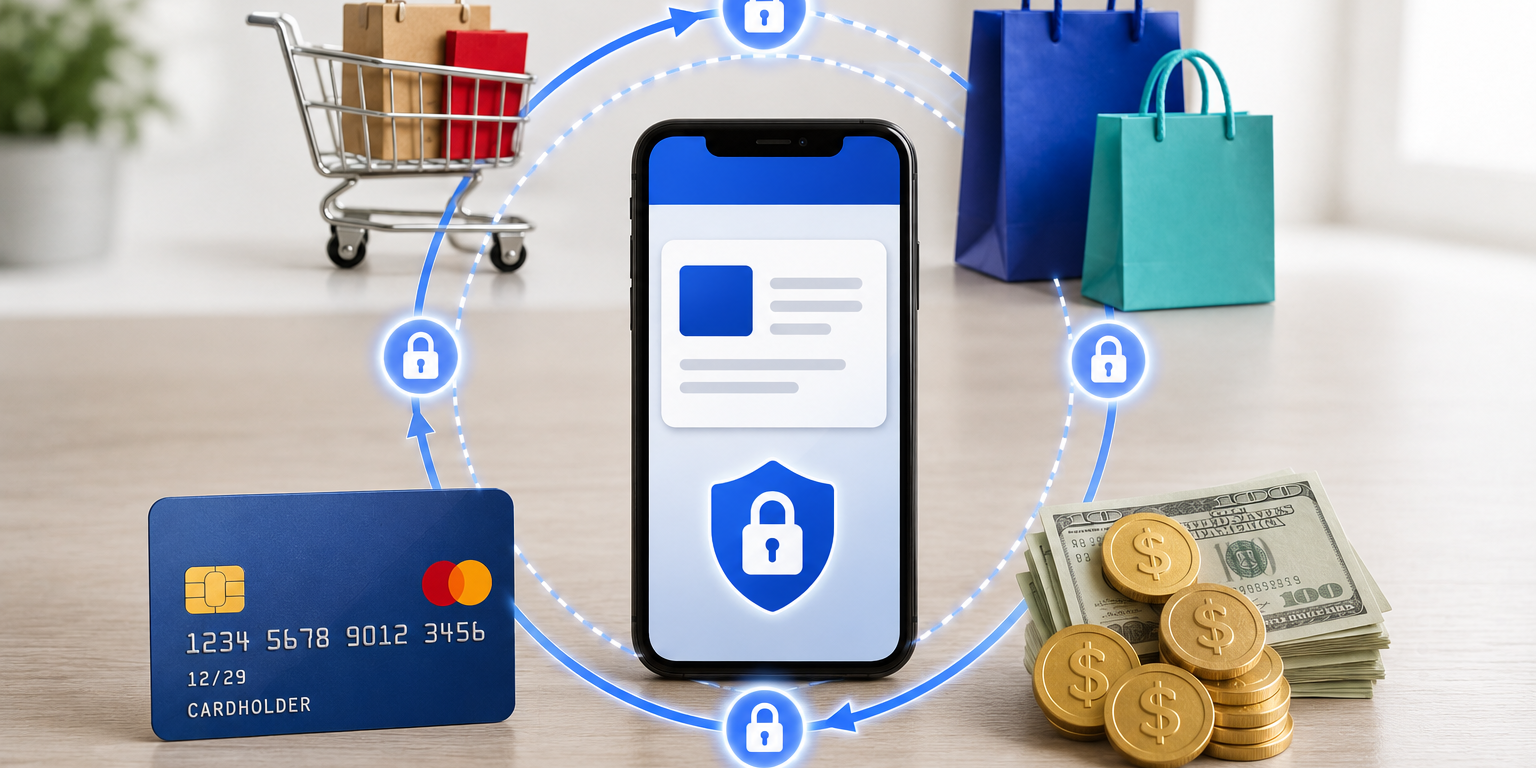
What is Point -to Point Encryption (P2PE)?
Point-to-Point Encryption (P2PE) is a payment security standard defined by the PCI Security Standards Council (PCI SSC). It ensures that sensitive payment card data is immediately encrypted at the point of entry, such as a card reader or payment terminal, and remains encrypted until it reaches the secure payment processor.
Unlike general encryption methods, P2PE is validated and standardized to offer complete end-to-end protection. Think of it as a digital safe: card details go in locked, travel securely through shipboard networks, and can only be unlocked by the bank or payment processor.
Why P2PE Matters for Cruise Operations?
Cruise ships handle thousands of transactions every day across onboard purchases, shore excursions, retail shops, spa services, and dining. Many of these transactions occur while the vessel is at sea, where internet connectivity can be variable and security threats are harder to manage.
In this environment, a single vulnerability can expose cardholder data, leading to costly breaches and erosion of guest trust. P2PE protects every card swipe, tap, or insert, ensuring transactions remain secure regardless of where the ship is sailing.
How P2PE Works?
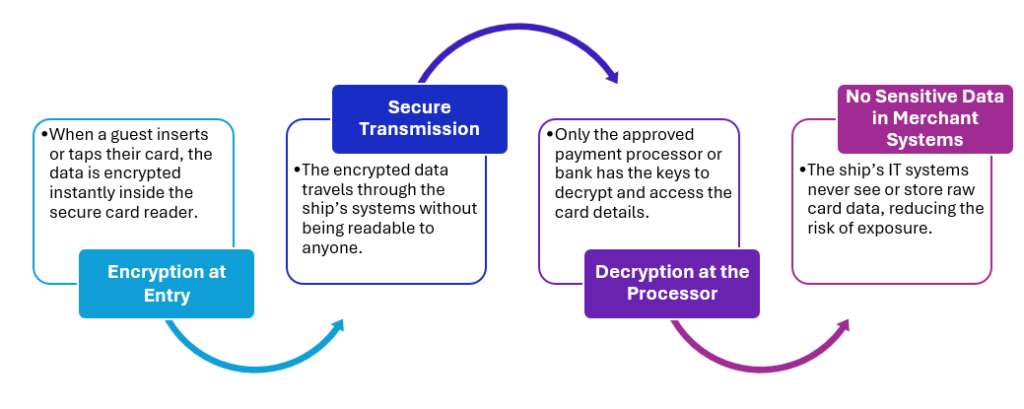
P2PE isolates payment data completely from merchant systems through a secure three-step process:
- Slow Processing: Physically marking off names at multiple muster stations creates significant delays, often adding precious minutes to the accountability process.
- Data Discrepancy: Information collected on paper must then be manually reconciled, leading to data entry errors and a delayed consolidated view for the bridge team.
- Inaccurate Status: The Bridge (command centre) lacks real-time visibility into the exact status and location of all individuals, complicating damage control and search and rescue efforts.
- Compliance Burden: Demonstrating compliance for regulatory bodies is cumbersome, relying on retrospective paper trails rather than verifiable, time-stamped digital records.
Because unencrypted card data never enters or touches shipboard servers, merchant system exposure is eliminated.
Key Benefits of P2PE
- Enhanced Security: Protects cardholder data against interception, malware, or internal theft.
- PCI Compliance Simplification: Drastically reduces the scope of PCI DSS audits for cruise IT and finance teams.
- Guest Trust: Reinforces confidence that guest payment details and personal financial data are completely secure.
Challenges and Considerations
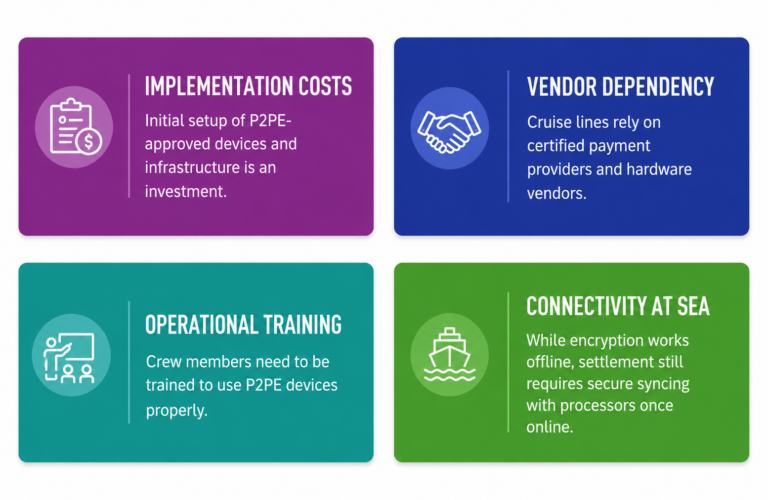
While P2PE delivers robust security, cruise operators should consider four key factors during fleet deployment:
- Implementation Costs: Upgrading hardware to P2PE-approved terminals and infrastructure requires an initial capital investment.
- Vendor Dependency: Cruise lines rely on certified payment solution providers and hardware vendors.
- Operational Training: Shipboard crew and revenue staff must be trained to use P2PE-compliant devices properly.
- Connectivity at Sea: While point-of-sale encryption operates seamlessly offline, final transaction settlement still requires secure periodic syncing with payment processors once online.
Conclusion
P2PE is more than a compliance checkbox, it’s a strategic safeguard for modern cruise operators. By encrypting cardholder data from the point of payment to the final processor, it ensures secure, end-to-end, and seamless transactions onboard.
In an environment where guests expect convenience, confidence, and safety, P2PE reduces operational risk, strengthens data security, and reinforces the cruise line’s reputation for safety and trust.
Schedule a Demo

Tanaya Patil is a naturally curious technical writer who makes complicated information feel simple and practical. She enjoys diving beneath the surface to understand how systems work and how well‑designed processes lead to great outcomes.